
|
How to read a CPL Racing dyno chart Further down the page is an example of a typical dyno chart showing HP from the same car before and after modifications. We publish this type of graph to help customers understand the true performance increases gained by modifications. When customers make an enquiry, they usually make reference to peak power figures ONLY. Although relevant, the peak power figure is just one element of what is important when considering how effective a power upgrade is. In order to explain this better, we have shown an anotated sample graph below. Firstly take a look at the vertical scales, in this instance both vertical scales read HP. (This means wheel horse power as read by the dyno). You can see that each large block represents 30 HP, which is sub-divided into 5 smaller blocks which each represent 6 HP. Secondly, look along the horizontal scale and note that each large block represents 1000 rpm, with each smaller block within representing 200 rpm. In this example we are looking for HP gains at 5500 rpm and 7500 rpm. You can clearly see that at 5500 rpm there is a HP gain of 66, and at 7500 rpm a HP gain of 72. Additional things to note about this comparison: 1. There are power gains at every point in the rev range 2. Above 8400 rpm there is power that did not exist before the modifications. (In fact you can see that the power was still rising but the rpm limit had been set to 8800rpm for safety) 3. The higher of the two power lines is highly linear after modifications, without the lumps or bumps which were present before modification. 4. The graph below shows a meaningful comparison as it is comparing the same car on the same dyno before and after modification. There are large variations between the readings of various makes of dyno, so in most instances you will not get a realistic comparision if you compare a power reading/graph from one make of dyno to the power reading/graph from another. EXAMPLE DYNO CHART FOR EXPLANATION PURPOSES 
An Example of Some Dyno Charts
Honda Dyno Charts
Civic Type R FN2
Stock FN2 vs CPL Supercharged FN2 (Power and torque measured at the wheels) 

Civic Type R EP3 CPL Racing Stage 1

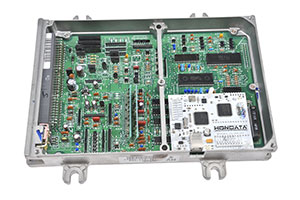
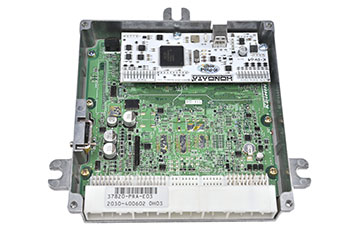
The CPL Stage 1 tune consists of a catback exhaust system, cold air intake and a Hondata K100 ecu plus dyno tuning. As you can see in the graph the results are very impressive with large gains in the mid range and top end. CPL Racing Turbo Kit 
The above chart shows the minimum power increase available from the CPL Turbo kit. At the time of testing this car had only 5psi and a catalytic converter in place, therefore it was fully road legal and would pass an MOT test without any problems. As can be seen above this setup gives excellent gains in both power and torque. Jackson Racing Supercharger comparison

The Above dyno chart show two different Supercharged setups. Blue: Jackson Racing Supercharger DC Sports Exhaust Manifold DC Sports Cat Back AEM Cold Air Intake Red: Jackson Racing Supercharger TODA Cat Back TODA Exhaust Manifold CPL Racing Cold Air Intake ARIEL ATOM 300 The Ariel Atom 300 comes from the Ariel factory already fitted with a supercharged Honda K20 engine. At CPL Racing we are able to improve further on the performance of this vehicle with the additional of our own air intake system and an ecu remap, the increases from this upgrade can be seen below.

Subaru Dyno Charts Impreza WRX U.K. MY2005
The dyno charts below show horsepower and torque on a WRX MY2005 with stage one modifications. The lowest line on the charts shows pre-ecu tuning, the middle line shows ecu tuning at low boost and the top line shows ecu tuning at higher boost. The ECUTEK ecu tuning system was used by CPL Racing to achieve these results, with the boost switch feature utilised to alternate between low and high boost. 

Impreza WRX JDM MY1994
This Impreza WRX JDM MY1994 benefits from stage 1 mods with the addition of a front mounted intercooler. To allow this car to reach it's full potential CPL Racing added a HKS FCON ecu and tuned this in house. The dyno charts show before with the parts fitted and after the ecu tuning. 

|